
من كتاب «لن نعيش ذميّين» للمفكر أنطوان نجم – تتمة (2)
(إن هذا البحث يرمي إلى استذكار فترة مهمة من تاريخ قيام لبنان التعددي المستقل، لا إلى نكء الجراح أو التشفي، بل لتوضيح حقيقة شعور وقلق جناحي لبنان، بعيداً عن التضليل وتحريف الوقائع)
الفشل في كسب المسلمين
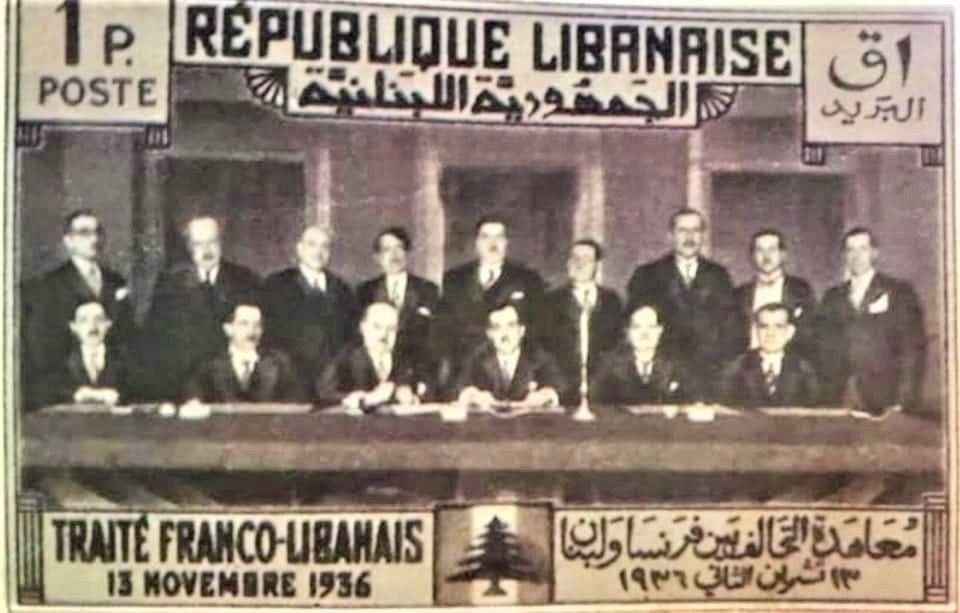
كان مشروع «المعاهدة اللبنانية – الفرنسية» سنة 1936 مناسبة لتأجيج المعارضة ضد الكيان اللبناني في حدوده التي أُعلنت عام 1920، كما كان مناسبة لمحاولة استمالة المسلمين إلى فكرة «لبنان الكبير». فقد سعى الرئيس إميل إدّه، آنذاك، إلى الحصول على موافقة شخصيات مسلمة بارزة على الكيان اللبناني. وجرت محاولات لإدراج هذه الموافقة في ملاحق للمعاهدة، عُرفت برسائل متبادلة، غير أنّ المعارضة الإسلامية بقيت قوية. إذ سرعان ما أعلنت جمعية اتحاد الشبيبة الإسلامية تمسكها بمبدأ الوحدة السورية، كما عبّر المجلس القومي الإسلامي عن استيائه من الوعود التي لم تُنفذ، فرفع مذكرات احتجاج إلى الحكومة الفرنسية والمفوّض السامي يطالب فيها بالوحدة مع سوريا
الميثاق الوطني: خذ وطالب
استمرت السلبية في الموقف الإسلامي حتى إعلان الجنرال كاترو استقلال لبنان في 16 تشرين الثاني 1941. وفي مطلع عام 1942 ظهرت «الكتلة الإسلامية» التي ضمت وجوهاً من الطوائف الإسلامية (الدروز والشيعة والسنّة)، وكان لها دور بارز – بدعم من رئيس وزراء مصر مصطفى النحاس باشا – في تعطيل المرسومين 49 و50 الصادرين في 17 حزيران 1943، واللذين حددا توزيع مقاعد مجلس النواب وأدرجا المغتربين المجنّسين ضمن الهيئة الناخبة
في أجواء ما عُرف لاحقاً بـ«الميثاق الوطني»، جرت انتخابات 1943، فانتُخب بشارة الخوري رئيساً للجمهورية وشكّل رياض الصلح أول حكومة استقلالية. عُدّل الدستور وصمدت الحكومة أمام ضغوط فرنسا، حتى جلت جميع الجيوش الأجنبية عن لبنان في 31 كانون الأول 1946، فاستكمل لبنان استقلاله
الموقف الإسلامي بعد الاستقلال
لم يغيّر معظم القيادات الإسلامية من نظرتهم إلى لبنان، إذ ظلّ التوجّه العام يقوم على العمل من أجل وحدة عربية أوسع، اعتُبرت في نظر الكثيرين امتداداً طبيعياً للهوية الإسلامية. وقد برز ذلك في أزمات 1958، ثم خلال الحرب اللبنانية (1975–1990) وما تلاها
وقد اعتبر رشيد كرامي، رئيس الحكومة في مراحل طويلة من الحرب، أن «الميثاق الوطني صيغ لمرحلة معينة وقد تغيّرت الظروف». ورأى المفتي الشيخ حسن خالد عام 1976 أنّ الميثاق كان تسوية شفهية بين المسيحيين والمسلمين في ظل الانتداب الفرنسي: يتخلى المسيحيون عن طلب الحماية الأجنبية، ويتخلى المسلمون عن المطالبة بالوحدة مع المحيط العربي، لكن الحاجة باتت تدعو إلى تطوير الدستور ليؤكد عروبة لبنان
وهذا ما ينسجم مع ما قاله محيي الدين النصولي عام 1936: «إن المسلمين لا يرضون بديلاً عن الوحدة، فهي عقيدتهم الثابتة»
ومن المفارقات أنّ كلّاً من رشيد كرامي والمفتي حسن خالد اغتيلا لاحقاً خلال الحرب اللبنانية، في ظل صراع محلي وإقليمي معقّد
From the book “We Shall Not Live as Dhimmis” by the thinker Anṭwān Najm – Continuation (2)
(This study aims to recall an important period in the history of the establishment of pluralistic and independent Lebanon, not to reopen wounds or for vindictiveness, but to clarify the true feelings and concerns of both wings of Lebanon, away from distortion and falsification of facts.)
Failure to Win Over the Muslims
The 1936 project of the “Lebanese–French Treaty” was both an occasion to inflame opposition against the Lebanese entity within its 1920-declared borders and an opportunity to win over Muslims to the idea of “Greater Lebanon.” President Émile Eddé, at the time, sought to obtain the approval of prominent Muslim figures for the Lebanese entity. Efforts were made to record this approval in treaty appendices, but Islamic opposition remained strong. The Union of Islamic Youth quickly affirmed its commitment to the principle of Syrian unity, and the Islamic National Council expressed dissatisfaction with the unfulfilled promises, submitting memoranda of protest to the French government and the High Commissioner, calling for unity with Syria.
The National Pact: Give and Demand
Muslim opposition continued until General Catroux declared Lebanon’s independence on 16 November 1941. In early 1942, the “Islamic Bloc” emerged, comprising figures from Islamic sects (Druze, Shia, and Sunni), and played an active role—supported by Egyptian Prime Minister Mustafa al-Nahhas Pasha—in blocking Decrees 49 and 50 of 17 June 1943, which determined parliamentary seat distribution and included expatriates with Lebanese citizenship in the electorate.
In the atmosphere that later became known as the “National Pact,” the 1943 parliamentary elections were held. Bechara El-Khoury was elected President, and Riad al-Solh formed the first independence government. The constitution was amended, and the government stood firm against French pressures, until all foreign armies withdrew from Lebanon on 31 December 1946, completing Lebanon’s independence.
Muslim Position After Independence
Most Muslim leaders did not change their perspective toward Lebanon, maintaining a general orientation toward broader Arab unity, which many saw as a natural extension of Islamic identity. This was evident during the 1958 crisis, and later throughout the Lebanese Civil War (1975–1990) and its aftermath.
Rashid Karami, Prime Minister during long periods of the war, considered that “the National Pact was formulated for a specific stage, and circumstances have now changed.” Grand Mufti Sheikh Hassan Khaled also viewed in 1976 that the Pact was a verbal settlement between Christians and Muslims under the French Mandate: Christians abandoned the demand for foreign protection, and Muslims abandoned claims for unity with the Arab world, though he stressed the need to amend the constitution to confirm Lebanon’s Arab identity.
This aligns with what Muhyiddin Nasuli said in 1936: “Muslims accept no alternative to unity; it is their fixed creed.”
It is a historical irony that both Rashid Karami and Grand Mufti Hassan Khaled were later assassinated during the Lebanese Civil War amid a complex local and regional conflict.
Extrait du livre « Nous ne vivrons pas comme des dhimmis » du penseur Anṭwān Najm – Suite (2)
(Cette recherche vise à rappeler une période importante de l’histoire de la création d’un Liban pluraliste et indépendant, non pour rouvrir des blessures ou par désir de vengeance, mais pour clarifier les sentiments et inquiétudes réels des deux ailes du Liban, loin de toute déformation ou falsification des faits.)
L’échec à rallier les musulmans
Le projet de « Traité libano-français » de 1936 fut à la fois une occasion d’attiser l’opposition contre l’entité libanaise dans ses frontières proclamées en 1920 et une opportunité de rallier les musulmans à l’idée du « Grand Liban ». Le président Émile Eddé, à l’époque, chercha à obtenir l’approbation de personnalités musulmanes influentes pour l’entité libanaise. Des efforts furent faits pour consigner cet accord dans les annexes du traité, mais l’opposition islamique resta forte. L’Union de la jeunesse islamique affirma rapidement son attachement au principe de l’unité syrienne, et le Conseil national islamique exprima son mécontentement face aux promesses non tenues, soumettant des mémorandums de protestation au gouvernement français et au Haut Commissaire, réclamant l’unité avec la Syrie.
Le Pacte national : donner et réclamer
L’opposition musulmane se poursuivit jusqu’à la proclamation de l’indépendance libanaise par le général Catroux le 16 novembre 1941. Au début de 1942, le « Bloc islamique » vit le jour, réunissant des personnalités des communautés islamiques (druzes, chiites et sunnites), et joua un rôle actif—avec le soutien du Premier ministre égyptien Mustafa al-Nahhas Pacha—dans le blocage des décrets 49 et 50 du 17 juin 1943, qui définissaient la répartition des sièges parlementaires et incluaient les expatriés détenteurs de la nationalité libanaise dans le corps électoral.
Dans le cadre de ce qui devint plus tard le « Pacte national », les élections législatives de 1943 eurent lieu. Béchara el-Khoury fut élu président, et Riad al-Solh forma le premier gouvernement indépendant. La constitution fut amendée et le gouvernement résista aux pressions françaises, jusqu’au retrait complet de toutes les armées étrangères du Liban le 31 décembre 1946, marquant l’achèvement de l’indépendance du pays.
La position musulmane après l’indépendance
La plupart des dirigeants musulmans ne modifièrent pas leur vision du Liban, conservant une orientation générale vers une unité arabe plus large, considérée par beaucoup comme une extension naturelle de l’identité islamique. Cela fut visible lors de la crise de 1958, puis pendant la guerre civile libanaise (1975–1990) et ses suites.
Rachid Karamé, Premier ministre pendant de longues périodes de la guerre, considérait que « le Pacte national fut élaboré pour une étape spécifique et les circonstances ont désormais changé ». Le grand mufti Sheikh Hassan Khaled jugeait également en 1976 que le Pacte constituait un règlement verbal entre chrétiens et musulmans sous le mandat français : les chrétiens renonçaient à la protection étrangère et les musulmans aux revendications d’unité avec le monde arabe, tout en soulignant la nécessité de modifier la constitution pour affirmer l’identité arabe du Liban.
Cela correspond à ce qu’affirma Mohyiddin Nasouli en 1936 : « Les musulmans n’acceptent aucun substitut à l’unité ; c’est leur credo immuable. »
Il est historiquement ironique que Rachid Karamé et le grand mufti Hassan Khaled aient été assassinés plus tard pendant la guerre civile libanaise, dans le cadre d’un conflit local et régional complexe.


